Hieracium genus taxonomy
Study to shed light on the evolution of this little-known genus
Description
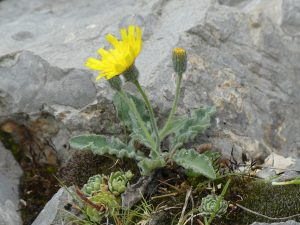
Hieracium Kochianum – Col de Grimone
The genus Hieracium (Asteraceae) represents one of the most taxonomically complex groups of European vascular flora. The presence of hybridization, polyploidy, and apomixis makes it particularly difficult to define species and study their evolutionary relationships, which are still largely unknown. For this reason, studying its systematics requires an integrated approach that combines various disciplines, including morphometrics, cytogenetics, population genetics, and phylogenomics. Our group’s contribution to research begins with fieldwork aimed at sampling natural populations and their subsequent cataloging, which also enriches the botanical heritage of the Herbarium of the University of Pavia (Herbarium Universitatis Ticinensis) and other Italian and European herbaria. Seeds are also collected and deposited at the Germplasm Bank of the University of Pavia for future analysis, and live plants are maintained in cultivation. The collection of morphometric data from herbarium specimens, the determination of ploidy levels and genome size through chromosome counts and flow cytometry analysis, are used to identify diploid and polyploid species. More recently, the addition of population genetics and phylogenomic approaches has allowed us to test evolutionary hypotheses, thanks to the sequencing of nuclear and plastid markers and more advanced techniques such as radSEQ and whole genome sequencing.
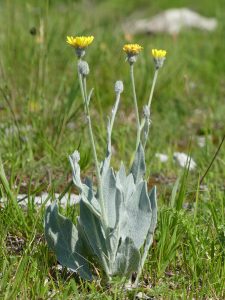
Hieracium tomentosum – Limone Piemonte